The state of rest and state of motion of the bodies under the action
of different forces has engaged the attention of philosophers,
mathematicians and scientists for many centuries. The branch of physical
science that deals with the state of rest or the state of motion is
termed as Mechanics. Starting from the analysis of rigid bodies under
gravitational force and simple applied forces the mechanics has grown to
the analysis of robotics, aircraft's, spacecrafts under dynamic forces,
atmospheric forces, temperature forces etc.
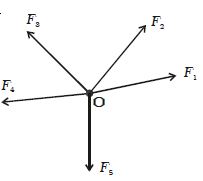
Archimedes (287-212 BC), Galileo lasac Newton (1642-1727) and
Einstein 0878-1955) have contributed a lot to the development of
mechanics. Contributions by varignon, Euler, D. Alembert are also
substantial. The mechanics developed by these researchers may be grouped
as
(i) Classical mechanics Newtonian mechanics
(ii) Relativistic mechanics
(iii) Quantum mechanics/wave mechanics
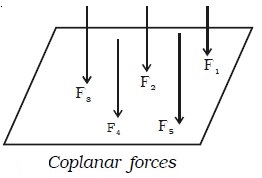
Sir Issac Newton, the principal architect of mechanics, consolidated
the philosophy and experimental findings developed around the state
of rest and of motion of bodies and put forth them in the form of three
laws of motion as well a the law of gravitation, The mechanics based on
these laws is called Classical mechanics or Newton mechanics. Albert
Einstein proved that Newtonian mechanic fails to explain the behavior
of h speed (speed of light) bodies He put forth the theory of
Relativistic Mechanics Schrodinger (1887-1961) and Broglie (1892-1965)
showed that Newtonian mechanics fails to explain the behavior of
particles when atomic distances are concerned. They put forth the theory
of Quantum Mechanics
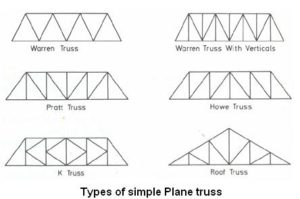
Engineers are keen to use the laws of mechanics to actual field
problems. Application of laws of mechanics to field problem is termed as
Engineering Mechanics.

No comments:
Post a Comment